A real story to begin with…
A month ago I received a WhatsApp message from a client: “Hey Marco, call me when you have 2 minutes.” I could feel the excitement. On the call I understood why: the operations manager of a company that operates in 150 countries and employs 16,000 people had discovered my client’s business on LinkedIn and reached out.
When my client asked: “How did you find out about us and what got you interested?”, the lead replied: “A connection on LinkedIn referred you to me. When I checked out your company, you sounded exactly like what we were looking for.” My client signed them up within a month of their first meeting.
A few months earlier…
This client engaged Selegance Marketing Services a few months prior to this message because they had the following symptoms:
- Current clients loved their product, but with new prospects, there was constant chasing up.
- Their sales cycles were long and had very low close rates.
- Prospects were complaining that their price was too high.
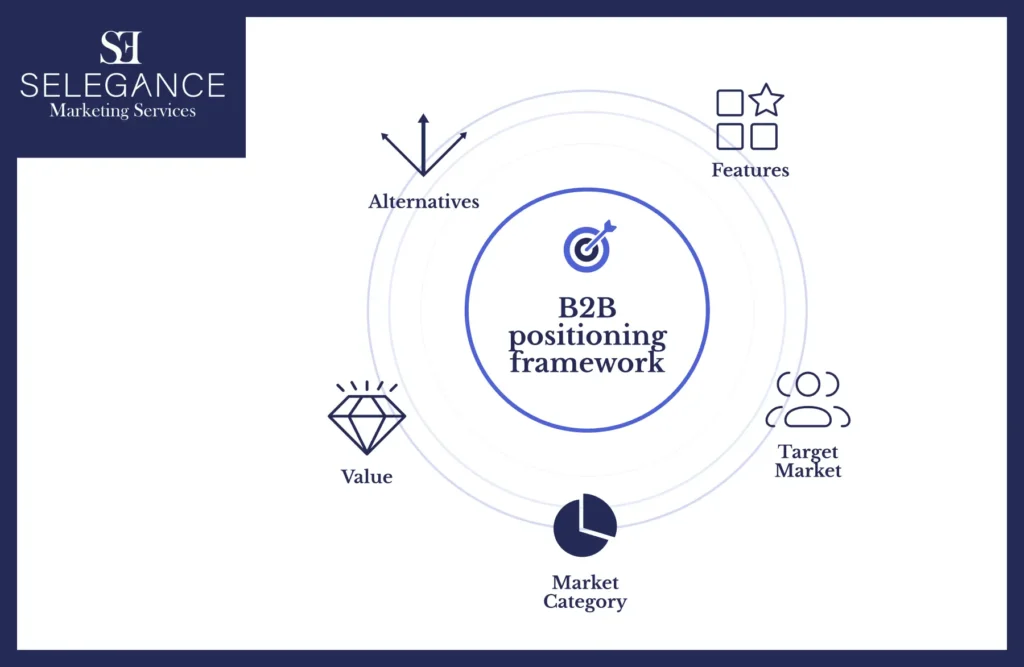
One of the platforms they wanted to leverage was LinkedIn. Before doing anything to their LinkedIn page though, I flew to their office to re-establish one thing: their positioning. While there, I ran a 5 hour positioning workshop using a framework I learned from a positioning expert called April Dunford. I’ve been using and refining this framework for years and I love it because it is the most practical approach to positioning I have seen in my career.
We then used that positioning to shape their LinkedIn content, website messaging and lead generation activity. Since then, more and higher quality leads have followed.
Two notes
Explaining positioning in one article is not an easy task, but I hope this will provide the basis to get the conversation going within your business.
Also, I always recommend that any business working on its positioning involves an external agency or professional to do so. A person outside of the organisation adds a neutral perspective that people working inside the business simply cannot have. The investment will be worth it.
What is Positioning? A Simple definition
Put simply, it’s context. It’s the invisible force that helps prospects understand the value of what you sell and why they should buy it.
A technical definition: the strategic process of designing a brand’s or product’s offering to occupy a distinct, valued, and competitive space in the minds of the target audience. It answers the fundamental question: Why should a customer choose you over the competition?
Why Crafting Positioning Matters
Your business already has some kind of positioning, regardless of whether you have actively worked on it. From the moment you launched your business, you chose to:
- sell to a specific group of people
- be part of a specific market category
- compete with other specific businesses
- compete on specific attributes of your offering
The problem is that, for many businesses, that choice is either unintentional or only partially intentional, and that can have negative consequences.
In B2B, getting your positioning right works in your favour because your marketing gains a serious advantage. Your content resonates more, your paid ads convert better and you generate a higher ROI.
Conversely, getting your positioning wrong works against you. Prospects will not understand your unique value. You may have good website traffic but no enquiries. Leads will not convert into sales. Your ad spend may be high, but sales will remain slow. In other words, it becomes very, very hard to grow.
The good news is that positioning is something you can change, and the framework I’m about to share is a good starting point. Treat positioning like your business depends on it, because it does.
A Simple Guide that Will Help Craft Positioning for your Business
What follows is the same framework I use to craft or refine positioning for our clients. Work through each step, then bring all your findings together at the end.
You will see references to “product or service” when talking about your offering. Here it goes.
1. Alternatives (competitive)
Interview your best fit clients and ask what they were using before coming on board with you to solve the same problem you solve. Ask them what they would use if your offer did not exist.
Goal: you need to understand what prospects compare you with and what makes you better than your alternatives. The answer is the yardstick clients use to define what’s “better”.
Avoid your own assumptions about your offering. Your clients’ perspective on that matter will be different. Interview your best fit clients, or ask your marketing team to do so. The findings will be both surprising and illuminating.
2. Features (attributes)
When interviewing your clients, look for patterns in what they say they love about your product or service that makes you better than alternatives. Then map the attributes that competitors (alternatives from point 1), don’t have.
These can be product features, for example, if you sell software. If you are a service provider, your unique attribute could be your experience. Pick two or three core features or attributes that genuinely make you stand out. If you only come up with one strong attribute, that still counts.
3. Value
Many businesses confuse this step but you need to make a distinction between features, benefits and value. Map out what is the real value that those unique features/attributes (point 2) enable for clients. See the breakdown below:
- Feature = something unique your product or service has or does
- Benefit = the outcome that such features/attributes enable for clients
- Value = what that outcome means in your specific clients’ context and how it connects to a desire they have
Benefits vs Value: two practical examples below
Example 1
Let’s say a business offers support available 24 hours a day to its clients. How would we use that to work out their positioning to the business advantage? See below:
- Unique attribute = support available 24 hours a day.
- Benefit = clients can get help when an issue happens, regardless of the time.
- Value = organisations that run overnight production will value that attribute because they will experience less disruption if something goes wrong.
Example 2
Let’s say a software is fully configurable, not simply customisable. Let’s go through the same exercise.
- Unique attribute = full configurability
- Benefit = clients don’t have to change their processes because the software can be configured around how their business operates
- Value = organisations that run complex operations and cannot afford rigid software will value this feature more than organisations with simpler processes
A note: if you claim your product or service adds a specific value, you need to back that claim up with actual client testimonials. I mean real testimonials, from real clients, saying your product or service helped them achieve X and Y.
4. Target Market
I think targeting is one of the most misunderstood marketing concepts. You will usually hear from agencies that your target is “female, General Manager, between 45 and 55, living in Australia or the US”, or something along those lines. But to create effective targeting, you need to be much more specific than that.
Map the characteristics of that group of buyers that really care about the value (point 3) your unique attribute can deliver. What sets them apart? What makes them value your offer more than others? Define what that specific group of people have in common. That’s your target market. It needs to be defined.
Your solution might be relevant to a large group of people, for example, but only some of them will care a lot about it. Only part of that broader segment will gain real value from what you offer.
Take example 1. Many businesses like the idea of having support available 24 hours a day, but only a few operate overnight and really care about avoiding costly disruption in their production.
5. Market Category (frame of reference)
Ask your best fit clients what category do they think your product or service belongs to? Is it what you thought it was or do they see it differently?
Once you have that info define clearly the market you describe yourself as being part of. This will help the target market (point 4) instantly trigger a useful set of assumptions and understand your value quickly.
Take my website. I run a “B2B marketing agency”. Guess what’s in the hero section of my homepage? That is the first thing website visitors see when they land on the website. The “B2B marketing agency” category acts as a filter. It triggers a set of assumptions and sets the scene for everything that comes next on the website.
Reviewing, tweaking and optimising your positioning
If you know me, you know I like systems. Once you have defined what makes you better, mapped out your unique attributes and the value they bring and for whom, plus the overall frame of reference of your offering, bring it all together on one page, (yes, no longer than that), and make sure that that document becomes a compass for all your marketing activities.
Once your positioning is in place, systematically review it every 12 to 18 months and do a deeper, comprehensive refresh every 5 to 10 years.
A Final Word
Positioning is one of those things that not many companies sit, think through and implement correctly, especially small to medium B2B businesses. But if you are reading this, you are already one step ahead.
That WhatsApp message I mentioned at the start is what good positioning quietly does in the background. It makes the right people that find you online say “you sound exactly like what we were looking for”, and buy your offering quickly. If you want help working out your positioning for your B2B business, get in touch.


